


The History and Origins of Leatherworking in the UK
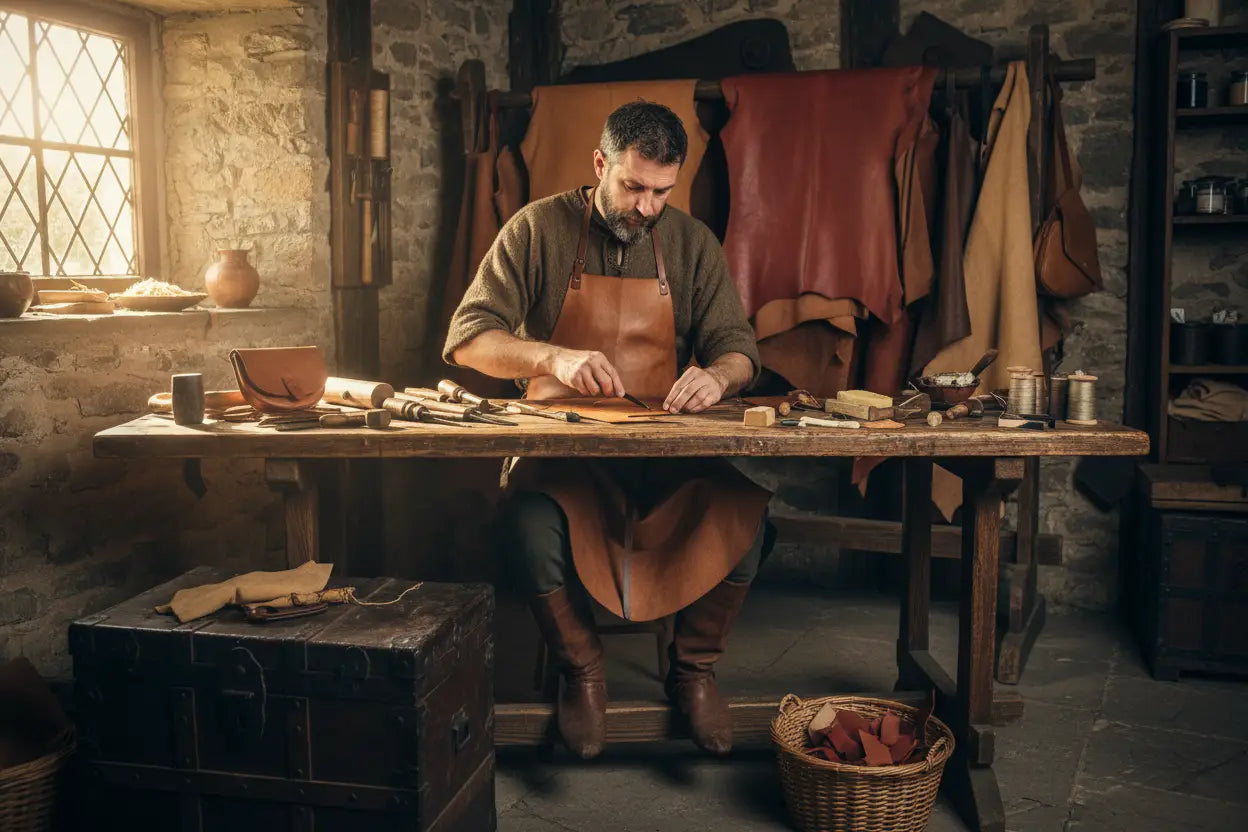 A Timeless British Craft
Leatherworking in the United Kingdom has a rich heritage spanning over two millennia, deeply woven into the fabric of British industry, culture, and daily life. From Prehistoric Times to Roman occupation to the Industrial Revolution and beyond.
The craft originated in Prehistoric times where Leather was used for shelter, clothing, and tools, with evidence of hide-working stretching back to the Stone Age. Leatherworking has since evolved while maintaining its essential connection to quality, durability, and skilled craftsmanship.
Roman Foundations (43-410 AD)
The story of British leatherworking really ramps up with the Romans, who brought sophisticated tanning techniques and established the first organized leather workshops across their settlements. Archaeological evidence from sites like Vindolanda and London reveals that Roman leatherworkers produced military equipment, footwear, and everyday goods using vegetable tanning methods that would influence British practice for centuries to come.
Medieval Guilds and Specialization (11th-15th Century)
The medieval period saw leatherworking flourish as a cornerstone of urban economies. Craft guilds emerged to regulate quality and training, with distinct specializations developing:
Tanners - transformed raw hides into usable leather
Curriers - finished and dressed the tanned leather
Cordwainers - crafted fine footwear from Cordovan leather
Saddlers - produced equestrian equipment and harnesses
Glovers - specialized in fine leather gloves
Cities like Northampton, Norwich, and London became renowned centers of leather production, with entire streets dedicated to specific leather trades—many street names like "Tanner Street" and "Leather Lane" survive to this day.
The Age of Exploration and Trade (16th-18th Century)
As Britain expanded its maritime reach, demand for leather goods surged. Naval vessels required vast quantities of leather for rigging, buckets, and protective gear. The growth of international trade brought new materials and techniques, while British leatherworkers developed innovations in waterproofing and durability essential for seafaring and colonial expansion.
Industrial Revolution and Mechanization (19th Century)
The Industrial Revolution transformed British leatherworking. While mechanization introduced efficiency in cutting and stitching, traditional hand-finishing techniques remained valued for premium goods. Northampton emerged as the epicenter of British shoemaking, while Walsall became synonymous with saddlery and equestrian leather goods—reputations both towns maintain today.
Chrome tanning, developed in the 1850s, offered faster production times, though many British craftspeople continued to favor traditional vegetable tanning for its superior aging characteristics and environmental benefits.
20th Century Challenges and Revival
The two World Wars saw British leatherworkers contribute essential military equipment, from boots to flight jackets. Post-war mass production and synthetic materials challenged traditional methods, leading to the decline of many historic workshops.
However, the late 20th and early 21st centuries have witnessed a remarkable revival. A growing appreciation for craftsmanship, sustainability, and heritage has sparked renewed interest in traditional British leatherworking. Small workshops and artisan makers are preserving time-honored techniques while adapting them to contemporary design.
British Leatherworking Today
Today's British leatherworkers honor centuries of tradition while embracing modern values of sustainability and ethical sourcing. The craft continues in historic centers and new workshops alike, producing goods that embody the same principles that have defined British leatherwork for generations: quality materials, skilled craftsmanship, and products built to last.
From vegetable-tanned leather that ages beautifully to hand-stitched construction techniques passed down through generations, the heritage of British leatherworking lives on in every carefully crafted piece.